Monday, December 6, 2010

My Trip to Yorktown

  Last week my mom and I visited Yorktown, the site of the decisive battle that ended the American Revolution.  The battle of Yorktown lasted two weeks.  British general Cornwalis was trapped at Yorktown - the French fleet had the British blockaded by sea and the Continental Army and the French troops surrounded them by land.  Finally the British surrendered in 1781 and the war officially ended with the signing of the Treaty of Paris in 1783.


  During our visit we saw an encampment with tents behind the Yorktown Victory Center.  We got to see a cooking demonstration using an earthen mound with holes in the bottom of it to cook food over.  There was also a lecture on field medicine, surgery, and apothocary treatments (it was very nasty), but best of all, I got to help in an artillery demonstration.  We couldn't set off the cannon we were pretending to fire, but the people who worked there could!  After we showed how to set off a cannon, the people working there actually shot off a mortar with a loud BANG!


  Not far from the Victory Center is the actual battlefield.  You can still see the earthen battlements made by the soldiers.  Visiting Yorktown was a gratifying conclusion to my studies of the American Revolution.

Wednesday, November 17, 2010

Animals Inside/Vertebrate Comparison: Human vs. Deer Skeletal Systems

  In science we are studying human anatomy while we learn about vertebrates and bodily systems. I had to choose one body system to create a project on. I chose to focus on the skeletal system because most people associate skeletons with Halloween and I like Halloween and spooky things, but as I learned quickly they weren't scary at all. They turned out to be fascinating.  The skeleton's function is to support the body, promote movement, and to create blood cells from the bone marrow.
 One thing that I have to do is compare and contrast the human skeleton and an another animal's skeleton. Luckily we had a friend named Wendy Martin who had a whole set of deer bones. She lent them to us so that we could try and assemble the bones, find out how old the deer was, and what its cause of death was.The bones were sooooo complex that we had a hard time putting them into the right place. Some of the bones were so small that we couldn't figure out where they went. After assembling the bones, we concluded that the deer was two and a half years old and died of a broken hip. Make no bones about it, it was a very awesome lesson!

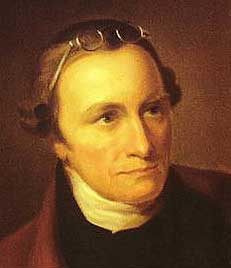
Patrick Henry: Revolutionary Man

Patrick Henry was one of America's founding fathers.  He was a post-colonial governor of Virginia, and one of the most influential and radical advocates for the American Revolution and republicanism.  Patrick Henry later opposed the Articles of Confederation with the U.S. Constitution because he feared that it would endanger states rights and individual freedoms.

St. John's Church here in Richmond was the site of the Second Virginia Convention of 1775 and Patrick Henry's famous "give me liberty or give me death!" speech, his plea to unite Virginians to join the cause of the American Revolution.  If you are ever in Richmond, you should check out this historic site.  The church's baptismal font is where Pocahontas was christened and given the Christian name Rebecca.

Scotchtown, located outside of nearby Ashland, Virginia, was one of the many places that Patrick Henry lived.  He lived there for only five years.  Sadly, his wife Sarah was mentally ill, and luckily for her, Patrick had an enlightened view of mental illness.  Most people thought mental illness was caused by the devil.  At Scotchtown, he made sure that she was well taken care of.  When she died, no one would give her a proper burial, so Patrick did it himself.  There is a lilac bush just outside of the house where his wife is supposedly buried.Patrick Henry did not die at Scotchtown, but he moved to Red Hill Plantation closer to Richmond. There he died at the age of sixty three.

   Patrick Henry was a great man because of his revolutionary ideas and his kindness toward his wife. Not many people back then would be kind to mentally ill people. What makes him even more extraordinary was the fact that he taught himself law and he got himself  a job as a lawyer! He truly was a self-made man who was very compassionate towards others.

Thursday, November 4, 2010

Johnny Tremain

  
 Eight patriotic men died at Lexington Green in the first volley of bullets; and so began the war for Independence, the American Revolution.

  Reading a work of historical fiction is a great way to get a inside look at historical events. We're learning about the American Revolution and we needed a good book that could give us the colonists' view and Johnny Tremain did just that. Johnny was a colonial silversmith's apprentice and was the best. Johnny had only one problem. He was so prideful in his work that one day he didn't see a puddle of melted wax on the floor, slipped in it and put his hand in molten silver, crippling it. He could no longer be a silversmith.

  Sometimes you need to fight for your beliefs, even if you have to die for them.

   Johnny had to find a new job. He finally settled on carrying papers for the Boston Observer, a local newspaper run secretly by the Sons of Liberty. He made a friend there named Rab. Rab wanted to fight and break away from England. One day Johnny heard the Sons of Liberty talk about having the Boston Tea Party and Johnny was to be part of it.

  "Mother England" taxes our tea, how dare she! We won't buy that tea, but we will board those tea ships and have a tea party in the harbor in which they sit!

Tea. The tea we have as part of our daily drink is gone to the sea for "Mother England" to see.

  During one of the Sons of Liberty meetings, they gave the following instructions.  If Sam Adams declared  "This meeting can do nothing for our country," Johnny would blow on a whistle to signal the start of the tea party. This is exactly what happened. Once Johnny got the signal, he blew on his whistle and patriots in Indian disguises started running onto the tea ships.  CHOP! CRACK! BOOM! SPLASH! That was the sound that came off those ships:  the sound of chests splitting and tea spilling into the harbor. When the work was done, the "Indians" ran back into the city and changed back into their original clothes. The "Indians,"  the British soon found out, were colonists and they had to pay for the tea.

  CRACK! The sound of a British gun firing, sounding the start of the American Revolution.

  The British started moving their troops into the colonies. While the British did that, the colonies formed militias of minutemen to fight back. At Lexington the British started fighting the minutemen and when the skirmish ended, eight minutemen were dead. Johnny knew Rab was at Lexington when the battle happened, so Johnny went looking for him. Johnny learned that Rab was mortally wounded. Rab later died from his wounds. Because of Rab's death, Johnny knows he has to fight for the freedom Rab wanted.  First he needs to have his crippled hand fix, which his friend Dr. Warren offers to do for him.  Johnny takes him up on it and begins to take up the cause. 

  I read this book because you can read all the facts about the American Revolution, but you won't find the important things that everyday people experienced.  Historical fiction gives you a fuller understanding because you get a different view that plain facts can't.  It puts you in the main character's shoes and allows you to see why people did things that they did.

Tuesday, October 19, 2010

Looking at Colonial Architecture: Shirley and Berkeley Plantations (VA)

  Shirley Plantation is about 10 miles outside of Richmond. We visited it because I am studying colonial history. Shirley was built along the James River in 1613. A man bought the plantation and named it after his wife, Shirley. He died before they moved in, so Shirley sold the plantation to another family. After three generations they could no longer keep the house in the family. They sold the plantation to the Hill Carter family. They still own the plantation today.

   There are lots of architectural designs in the interior that are beautiful. For example, the "Flying" staircase. It has no visible means of holding it up. It is a rare design in buildings. Sorry we don't have any pictures of it.


This is a dovecoat. They would use the doves to send messages, and as an excellent source of juicy dove meat and eggs. This is a picture (right) of me and my mom standing in front of Shirley's 350 year old oak tree.


We also went to Berkeley plantation where there is lots of history!  Our 9th President, William Henry Harrison lived at Berkeley, and Benjamin Harrison, who signed the Declaration of Independence, was born here as well. Berkeley was established in 1619 and was the site of the first thanksgiving. During construction hostile Indians attacked and killed everyone. Soon a new family bought Berkeley and finished construction of the plantation.

This was also the site where the song Taps was composed, and Lincoln came to visit General McClellan and the 140,000 Union troops that were stationed there. I could not imagine looking out the window and seeing so many tents on Berkeley's fields.  I would be scared that the Confederates would come and kill everyone on the plantation.  

 There was a good natural harbor at Berkeley and allowed them to have a good shipbuilding industry. They were master ship builders of the time. There was so much timber at Berkeley, they could make ships for years.

After the Civil War, the plantation fell into disrepair. No one used it or fixed it up until the early 1900's when a new family bought it. They soon opened it up for tourism to make some money to keep the plantation in the family. They still own it today.

I really enjoyed visiting these two plantations.  It gave me a good feel for colonial life.  During this time my family and I also watched the PBS show Colonial House,which was about modern day people setting up a colony in New England.  Their houses were one-roomed, no glass windows, and were simply furnished - very different from the plantations of the rich Virginians.  If I had to chose a colonial home, I think I would pick a plantation house!


Wednesday, October 13, 2010

Keep Plates Clean Or Family Gets Sick

   Keep Plates Clean Or Family Gets Sick is a good piece of advice, but it's also a good way to remember scientific classification (taxonomy): Kingdom, Phylum, Class, Order, Family, Genus, and Species. A man named Carl Linnaeus (b. 1707 - d. 1778) is the man on the left and he was the inventor of taxonomy. Carl was a nature man; in other words, he loved to study nature. He was a botanist, a physician, and a zoologist. He laid the groundwork  for the modern scheme of binomial nomenclature. Binomial nomenclature is the formal system of naming species. The name for humans is Homo Sapiens. Each species name is formed out of Latin, and has two parts: the genus name and the species name.

  
As part of our science lessons we did online binomial scavenger hunts on Wikipedia. We found out all sorts of plant and animal names.  This weekend we were sitting on the patio
when mom found a praying mantis. I let it crawl all over me and it felt weird! He is on top of my head in this picture.  The mantis comes from the order mantodea.
Today we did a plant dissection of a rose from our backyard (genus = rosa, that has over 100 species) and a gardenia (a genus of 142 species of flowering plants from the coffee family).  We did the dissection to examine the parts of the flowers - male and female parts, as well as the petals.  Check out this cool website from the Exploratorium in San Francisco to learn more about the secret life of flowers:
http://www.exploratorium.edu/gardening/bloom/secret_life_of_flowers/index.html


Wednesday, October 6, 2010

Martin Luther and William Penn: Protestant Rebels

Without the revolutionary teachings of Martin Luther (1483-1546), William Penn (1644-1718) would never have become a Quaker leader who later founded Pennsylvania. While they lived during different times and in different places, both men wanted religious freedom. It didn't happen overnight; it happened over years of determined work and personal hardships.

Martin Luther was a college student. His father wanted him to be a lawyer and he was about to pass his law studies when the plague hit. While sparing the Luthers, three of Martin's friends died in the plague. One night Martin was coming back to the college from his parent's house when a thunderstorm came up out of nowhere. Suddenly he had an epiphany. Because he didn't want to die, he swore to God that he would join the Catholic Church.

   As soon as he joined the church he found how brutal being a monk could be. He had to whip himself to show he was loyal to God. All monks at one point had to walk all the way to Rome, where the Catholic Church originated. He lived in Germany, and had to walk to Rome. Can you believe that? When he got there, he found out what the Catholic Church was really about. It wasn't all about spreading religion, but it was more concerned about getting money. When he found out, he had another epiphany. He was outraged and wanted everyone to know what he had found out!

  He posted his 95 Theses (or complaints) about the Catholic Church on the door of a local church.  Then he used the power of the printing press to make lots of copies which became very popular with commoners.  The Pope excommunicated him and Martin took his letter of excommunication and tossed it into the fire.  They called him to a trial called the Diet of Worms to see if he was a heretic.  He would not change his views.  Martin spent the rest of his life considered by some to be an outlaw, but he was saved by his popularity.
  
In comparison, William Penn faced a different kind of persecution.  He was also expected to become a lawyer, but after the plague hit England, he had a religious epiphany. William saw the Quakers, a group of Protestants, helping people in need.  He liked that they were pacifists too.  When he told his father that he became a Quaker, his father beat him and threw him out of the house.  

   Years later, his father died, and because the king owed his father some money, Penn asked for a colony in the Americas as payment for the debt.  The king was happy to be rid of the debt and the Quakers.  Penn set sail across the Atlantic and established the new colony of Pennsylvania.  Because he was a pacifist, he treated the native Americans well and traded with them fairly.  Here in the new colony his Protestant views helped advance the American ideas of religious freedom and democracy.   In fact his planned city of Philadelphia is called "the city of brotherly love."